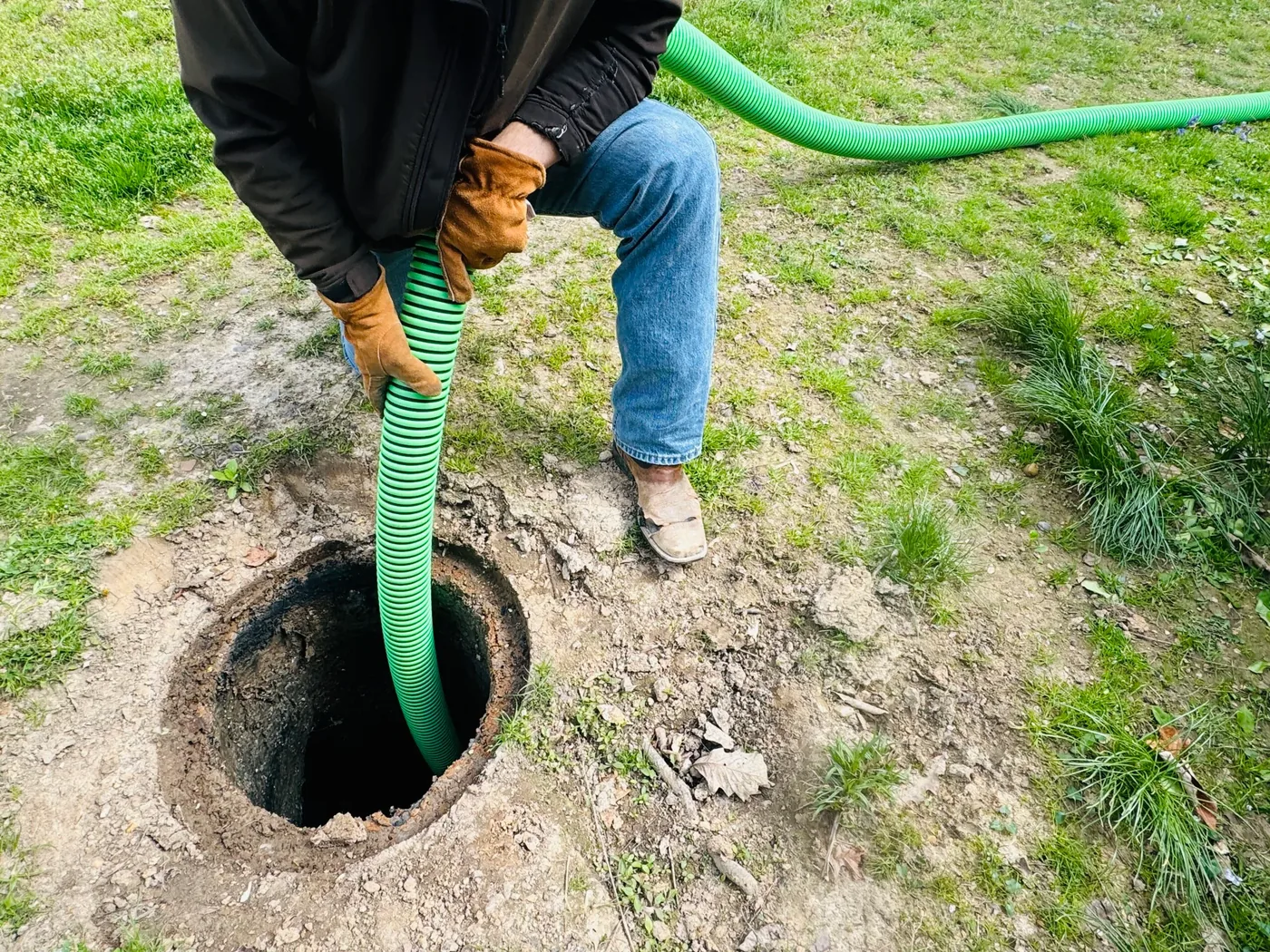
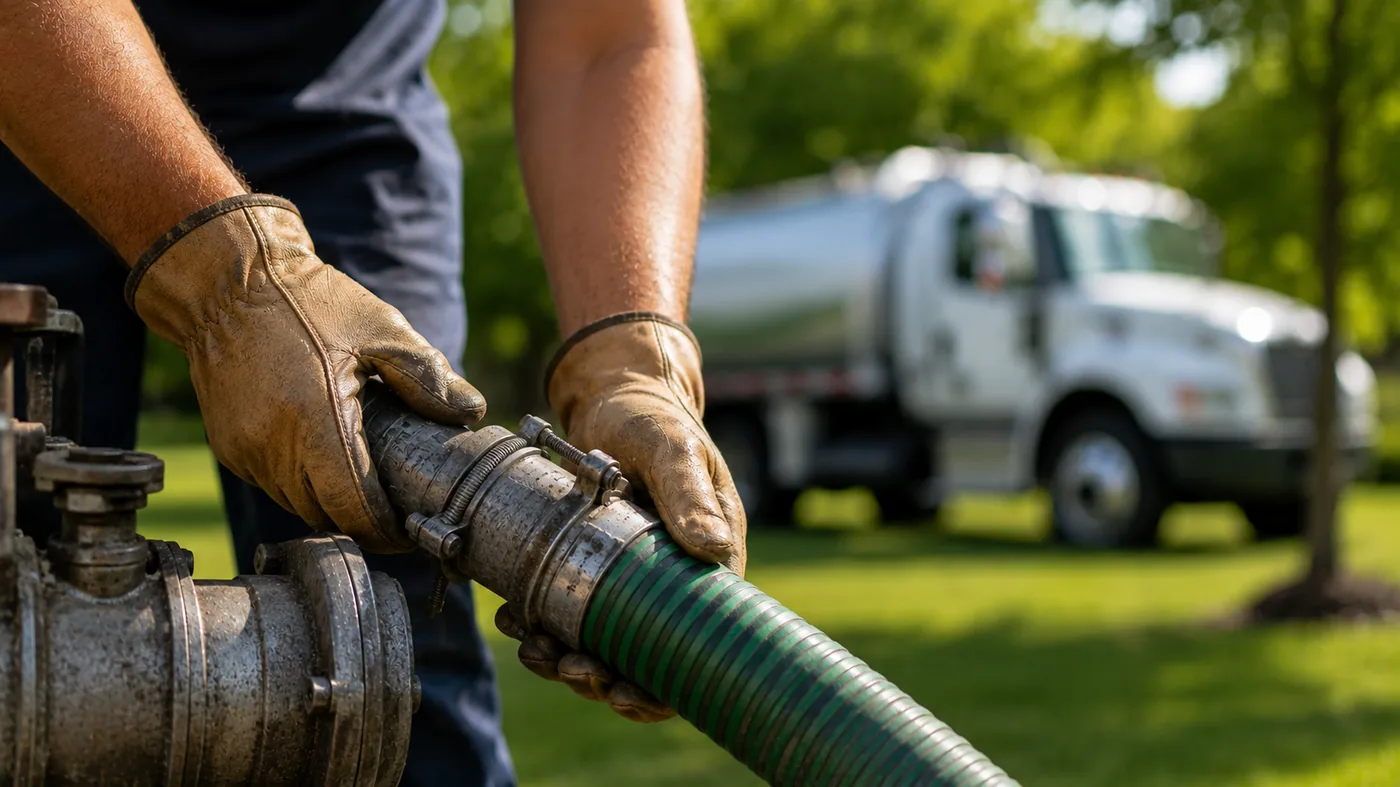
A full pump out down to the bottom. A look at the inlet and outlet baffles. A written receipt for your file. Every residential customer gets that, no upsells, no surprise add ons once the truck is in the driveway.
Three things happen inside a septic tank at the same time. Heavy solids settle to the bottom as sludge. Fats and oils float to the top as scum. The liquid layer in the middle flows out to the drain field. The tank is supposed to hold those solids long enough for bacteria to break them down, but the breakdown is never complete. Over time the sludge and scum layers grow and the working liquid space shrinks. Pumping removes that buildup so the tank can do its job again.
When a tank goes too long between pumpings, solids start sneaking out into the drain field. The field is the biggest and most expensive part of the whole system. Once it clogs with solids it usually cannot be fixed. The cheapest way to protect that investment is to pump the tank on a sensible schedule.
A real pumping job is more than sucking liquid off the top. It means locating the access lid, opening both compartments if the tank has two, removing the full contents down to the bottom, rinsing the inside where it helps, and checking the inlet and outlet baffles for damage. That is the service we do on every job.
Use these as a starting point. After the first visit we can usually tell you a tighter interval for your specific tank.
One or two people in the home with a 750 to 1,000 gallon tank. Most can stretch to four or five years between visits.
Three or four people in the home with a 1,000 or 1,250 gallon tank. Pump every three to four years to stay ahead of buildup.
Five or more people, heavy laundry days, or a garbage disposal that gets used daily. Plan on a pump out every two to three years.
Anything beyond the standard pump out, like installing risers, repairing a baffle, or clearing a backed up line, gets quoted separately and clearly before we touch it. You decide whether to move forward.
Real ranges drawn from actual jobs in our service area.
Covers most 750 to 1,250 gallon residential tanks where the lids sit at or near the surface.
Tanks carrying several inches of compacted sludge or systems that have gone many years without a pump out.
Added when the lids are buried and need locating or some digging before we can pump.
These are typical ranges, not guaranteed quotes. You will hear a real number for your home before any work starts.
Short answers to the questions we hear most often. Anything not covered, give us a call and we will walk through it on the phone.
Call (931) 555-0123A real person picks up the phone during business hours. You can usually get a real quote and a date on the calendar in one short call.